
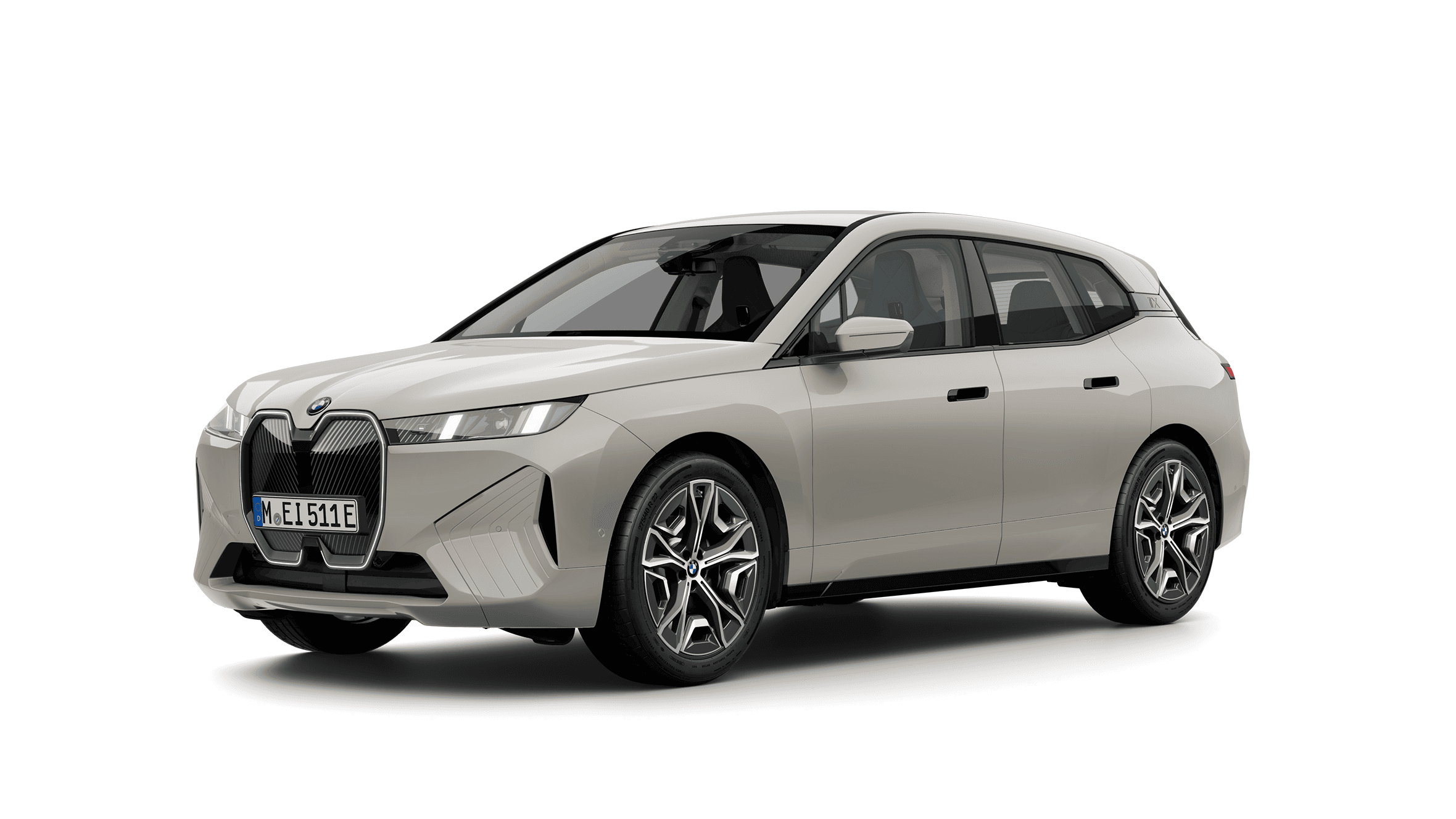

BMW iX
2026 Suv · ฿5,799,000 · 7.5/10 avg from 1 review

Auto Buyers Guide | Alex on Autos
1.1M subscribers·5 months ago· EN
2026 BMW iX xDrive45 Review | 402 HP, 312 Miles & A Discontinuation Notice
The BMW iX is a genuinely clever electric SUV with impressive efficiency, a beautifully spacious interior, and composed handling that makes it one of my favorite luxury EVs. The seats are less comfortable than an X5, charging is leisurely compared to rivals, and it's being discontinued in the US—which feels like a real shame.
First Impressions
The BMW iX is unlike anything else in BMW's lineup. While their i4, i5, and i7 are essentially gasoline cars with electric motors bolted underneath, the iX is a complete reimagining—a two-row luxury SUV built from the ground up as an EV, with a carbon fiber reinforced safety cage that makes it genuinely rare in today's market. We're driving the new 2026 xDrive45 model, which slots between the more powerful 50 and the aggressive 70. It's less powerful, yes, but also more practical and pragmatic than before. The iX has that characteristic BMW presence—that long hood, that upright SUV stance—but with proportions that make sense for electric efficiency. At roughly 195 centimeters long, it's nearly identical in footprint to the gas-powered X5, except lower to the ground and with a roof that tapers toward the rear for aerodynamics.
Design and Proportions
That massive kidney grille is obviously fake—it's a design statement, nothing more. The actual cooling happens below, through small air curtain inlets near the wheel wells. It's undeniably bold, and whether you love or hate it, you have to admit BMW committed to the vision. The rest of the exterior is cohesive: full LED headlights, a profile that gently tapers toward the rear, and that wrap-around hatch design that gives the cargo area a smaller opening than you'd expect. The lower roofline compared to the gas X5 is a necessary compromise for aerodynamics, and it means you'll scrape on parking lot overpasses a bit more easily. That said, the adaptive air suspension can pump the ride height up when you need it, which is a genuinely smart feature for an EV SUV.
The carbon fiber frame is the real story here. It's not the entire car—the hoods, fenders, and crash structures are aluminum—but that central safety cage is aerospace-grade CFRP. It's a technology showcase, and it matters for weight distribution and efficiency. You notice it in the cargo area where the shape is more square and upright than a traditional steel frame would allow, though there's some wasted space as a result. The hard parcel shelf keeps things quiet but takes up valuable real estate, and frustratingly, there's nowhere to stow it when you need the full cargo area.
Interior and Comfort
This is where the iX gets interesting and a bit divisive. Step inside and the seats are unlike anything else in the BMW lineup—wide, cushioned, sitting higher than you'd expect with your legs stretched out in front. The first row feels more like an overstuffed Lazy Boy than a traditional sports sedan, and honestly, I'm not entirely convinced by the design. They're less adjustable than X5 seats, no extending thigh cushion, and the massage function is pretty weak compared to other BMW models. Give them a 7 out of 10, and if you're trading in an X5, spend real time in these seats before committing.
The back seat, though—that's where the iX shines. There's a flat floor running all the way across, and despite the lower roofline, legroom is genuinely impressive. I had six inches of knee room to spare at 6'5", and there's enough space for larger rear-facing child seats. The 60/40 and 40/20/40 fold configurations are practical, and that electrochromatic glass roof is a fantastic feature that really does make a noticeable difference in blocking heat and light without the segmented roller-shade complexity of Porsche's system. Cargo capacity sits at just under 36 cubic feet—genuinely spacious, though not quite double the Polestar 3 in real-world terms as the measurement standards differ. What I appreciate most is how square and upright that space is, even if the hard parcel shelf is an irritating compromise.
Technology and Features
The iX uses BMW's standard iDrive system with the 12.3-inch touchscreen and full LCD instrument cluster. It's familiar territory if you've been in any modern BMW, supporting dual-screen Apple CarPlay, a head-up display, and a Harman Kardon audio system. What impressed me more was the practical touches: physical controls for air vents, defrost, and hazard lights mean you're not fumbling with menus constantly. The iDrive controller still works well, though I do wish they'd put cruise control distance adjustment on the physical controls rather than burying it in the touchscreen.
There's a deep center armrest storage area—much larger than typical—because there's nothing underneath but the battery. The steering wheel is standard BMW fare, and the joystick shifter takes about five minutes to stop feeling odd. One oddity: those cup holders are mounted low and far forward, making drink access genuinely tricky depending on your seating position. The inclusion of a dual-voltage, 40-amp EVSE as standard is a nice touch—most EVs top out at 30 amps, so this gets you closer to full-clip charging without requiring an upgrade.
Driving Experience
The dual-motor setup delivers 402 horsepower with a unique brushless design using electromagnets rather than permanent magnets, which BMW claims improves efficiency in various driving profiles. It shows: 0-60 takes 4.6 seconds, making it noticeably quicker than competitors but slower than the 50 (4.0 seconds) or the bonkers 70 (3.3 seconds). The power delivery feels linear, and critically, there's almost no torque steer—a problem that plagues so many dual-motor EVs. Around corners, it handles with genuine composure. The Polestar 3 and Macan EV might be more engaging in the twisties, but for daily driving, the iX makes more sense.
The adaptive air suspension is exceptional. It soaks up large potholes and speed bumps without becoming upset, maintains good body roll control, and doesn't suffer from the pitching and diving you get in lesser air suspension setups. In gravel and on rough roads, the extra height mode provides genuine clearance without sacrificing comfort. I measured the cabin at 58.5 decibels—easily one of the quietest I've tested, despite the 275/40R22 tires. Highway manners are composed, though tire choice significantly impacts range and efficiency. Real-world efficiency has been excellent: I've averaged around 3 kilometers per kilowatt-hour, delivering real-world range closer to 480 kilometers despite EPA ratings of around 500 kilometers. On a challenging daily commute that includes a 670-meter mountain pass and sustained highway speeds, it still impresses.
Efficiency and Charging
Here's where the iX shows both strength and weakness. With the 100 kWh battery and 402 horsepower, this model promises 500 kilometers of range depending on wheel and tire choices. BMW deserves credit for transparency: their configurator actually shows you which wheel packages deliver what range, so there's no guesswork. The most efficient variant is the 50 with its motor design, delivering up to 585 kilometers. Efficiency is genuinely strong across the range.
DC charging, though, is the weak point. Peak charging sits around 180 kW, which holds for a decent stretch but isn't competitive with upcoming rivals. The Lucid, Hyundai EVs, Kia EVs, and the incoming Polestar 3 refresh all charge significantly faster. That said, BMW includes a 40-amp home charger as standard, which is generous. If you charge primarily at home—as most EV owners do—this becomes less of a concern.
Final Verdict
The BMW iX is being discontinued in the US, which feels like a genuine loss. This is one of the most thoughtfully engineered luxury EVs available, with a carbon fiber frame, genuinely spacious interior, and efficiency that outperforms its EPA ratings. The seats won't work for everyone, charging is leisurely by 2026 standards, and it's expensive—but it's also refined, capable, and genuinely different from everything else.
If you can find one on a dealer lot and space and refinement matter more than charging speed, buy it. For new shoppers today, the Polestar 3 with its 2026 battery upgrade and faster charging, or waiting for the Volvo EX90, might make more sense. But the iX proved that electric luxury doesn't have to follow the playbook of its gas counterparts. It deserved a longer run.
Pros
- Spacious interior with 36 cubic feet of cargo and excellent rear legroom
- Carbon fiber safety cage is unique engineering for a production vehicle
- Excellent efficiency and real-world range that beats EPA figures
- Electrochromatic glass roof blocks heat and provides privacy without complexity
- Smooth, linear handling with torque-vectoring-free driving feel
- Adaptive air suspension balances comfort and composure exceptionally well
Cons
- Front seats lack the comfort and adjustability of the X5 they're supposed to replace
- Slow DC charging compared to Lucid, Hyundai, Kia, and upcoming rivals
- No front trunk means clutter in the frunk area with cooling components
- Steep pricing makes it a Model X replacement, not a Model Y one
- Hard parcel shelf wastes cargo space and has nowhere to store it
- Roofline is lower than gas X5, making parking lot clearance tricky
Verdict
“If you can find one on a dealer lot and space plus refinement matter to you, buy it—this is a brilliant luxury EV that deserves to exist. For most shoppers choosing right now, the Polestar 3 and upcoming Volvo EX90 offer faster charging and similar space, making them safer bets.”